
DevOps and DevSecOps Services
DevOps is the practice of building, testing and releasing software through an automated pipeline, so updates reach users quickly and reliably. DevSecOps adds security checks to that same pipeline. Every code change is scanned automatically, and serious problems surface long before release, when they are cheapest to fix.
Why this matters beyond the IT department
At many organizations, software now changes every week or even every day. Manual security reviews cannot keep up with that pace, so either releases slow down or checks get skipped. Automating the checks removes that trade-off. It also leaves a record of every check each build passed, which auditors and enterprise customers often ask to see.
The service is a good fit for banks, fintech, software companies and digital businesses that release frequently and need that evidence without adding manual bottlenecks.
What we build
- The pipeline itself, on GitLab CI, GitHub Actions or Jenkins.
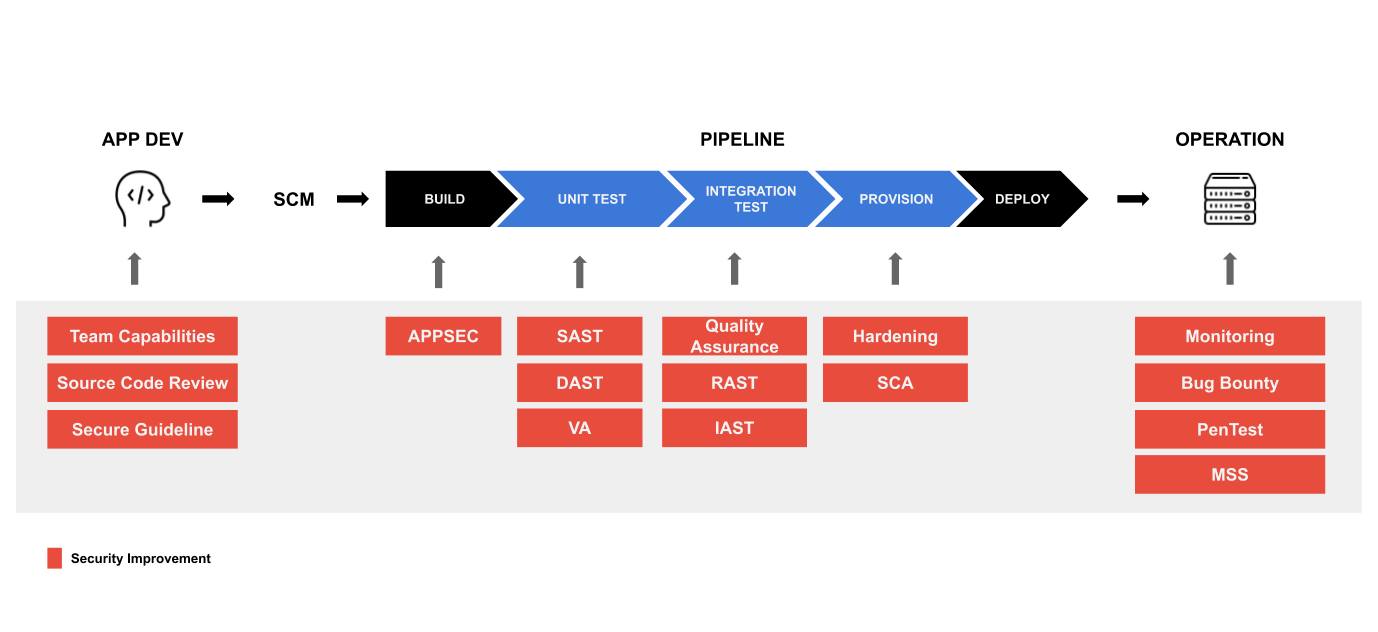
- Security checks inside it: static code analysis (SAST), open-source component checks (SCA), secret scanning to catch passwords left in code, dynamic testing (DAST) and container image scanning. We tune them so developers are not buried in false alarms.
- Checks on infrastructure as code (server and cloud setups written as files, for example in Terraform) and on Kubernetes clusters, against CIS Benchmarks.
- Policy as code, where release and deployment rules are written down, versioned, reviewed and enforced automatically.
- Logging, monitoring and alerting that serve both day-to-day reliability and incident response.
How a project unfolds
We begin by reviewing your current tools, environments, branching model and security practice. Together we then decide which checks run when code is committed, built and deployed, and which findings should block a release. Next we integrate the tools, write the pipeline configuration and set severity thresholds.
The period after launch is about tuning. We remove false positives and make sure each finding reaches the right developer with clear fix guidance. Finally we write runbooks and coach your team, so they can run the pipeline without us.
The work follows the NIST Secure Software Development Framework (SSDF, SP 800-218). We use OWASP SAMM, a maturity model for software security, to measure where you start and how far you have come.
The handover package
- A current-state assessment and a target pipeline design.
- Security checks implemented and documented in your CI/CD platform.
- Tuned rule sets and severity thresholds.
- Runbooks and training sessions for your developers.
Request a DevSecOps proposal to talk through your pipeline.